Florissant, MO · Garage Door Service
Black Jack homes mostly went up around 1970, which means extension-spring doors and steel track built for cold winters. We drive the 3 miles from Florissant to fix them.
We work out of Florissant, about 3 miles from Black Jack, so there's no branch office here and no separate crew - the same truck that handles Florissant calls comes over for yours. When you call, tell us the door's rough age and whether it's a single or double, since most Black Jack houses were built around 1970 and that year tells us a lot about what's likely on the other side of the wall before we even pull up. If you know whether it's ever been replaced, that helps too - a lot of these openers have been swapped once already, but the track and spring setup is often original.
We don't keep a depot in Black Jack, so we can't promise a walk-in look at your door - everything runs on scheduled calls from Florissant. That's the one real limit here: same-day isn't guaranteed, it depends on the route that day. What we can do is come prepared, because a house built in 1970 almost always means a specific spring and track combination, and we bring the right stock for that instead of guessing on site.
If your door won't open and the opener light is blinking, check the obvious first: the manual release cord (that red handle) may have been pulled, disconnecting the opener from the door itself. Pull it back and re-engage before you call anyone. You can also look at the tracks for anything obviously bent or a roller that's popped out - tighten loose bolts on the track brackets if you can reach them safely.
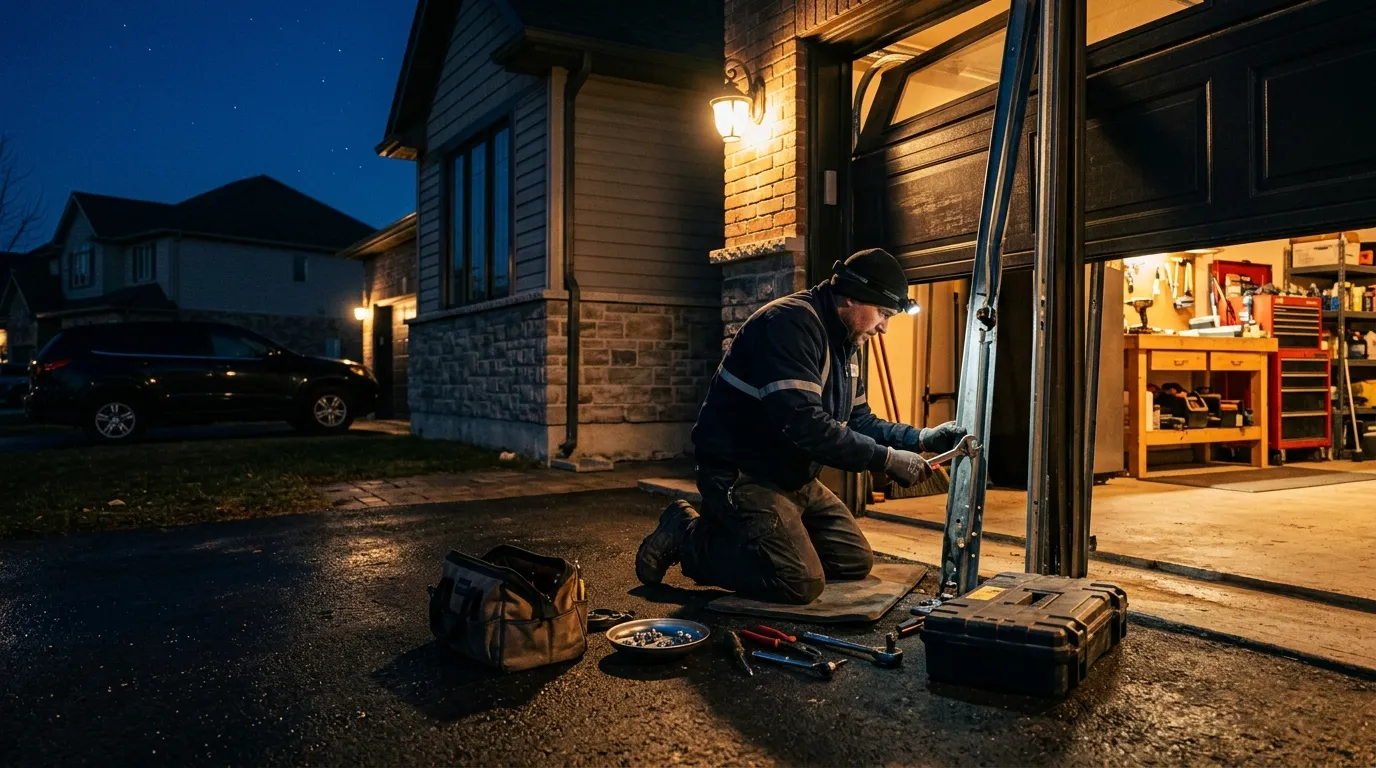
What you shouldn't touch: the torsion or extension springs. Doors from the 1970s building era in this area often still run extension springs mounted along the horizontal track rather than the torsion setup common in newer construction, and extension springs under tension can whip hard enough to break a bone or worse. Same goes for the cables running the lift mechanism. If the door is heavy, off its track, or the spring itself has snapped (you'll usually hear it - a loud bang), that's a call, not a DIY afternoon.
Black Jack's housing sits mostly around a 1970 median build year, and doors and openers from that era were built to a different set of standards than what's sold today. Extension springs, single-thickness steel panels, and lighter-gauge track were all normal then - none of it is wrong, but none of it holds up as long as modern galvanized hardware either, especially fifty-plus years on.
The cold moderate climate band this whole area sits in adds its own wear. Temperature swings through winter make steel contract and expand, which stiffens grease in old rollers and hinges and puts extra strain on springs that are already near the end of their rated cycles. On a house with original 1970-era hardware, that's often the tipping point - the spring that's been fine for decades finally goes on the coldest morning of the year, not because anything was done wrong, but because the parts are simply old and the cold found the weak point first.
For a door of this era, the fix usually starts with figuring out whether we're dealing with original hardware or a partial replacement from somewhere down the line - a lot of Black Jack houses have had the opener swapped in the last couple decades while the springs and track stayed original from 1970. If it's a snapped extension spring, we replace the pair (never just the broken one - the other is on borrowed time too) and check the pulleys and cable condition while we're in there, since original-era pulleys are often due.
If the track is bent or the rollers are the old steel type that's worn oval instead of round, that's a track and roller job on top of the spring. We won't sell you a full door replacement if the panel itself is sound - steel doors from this build era were solid, and often the frame and panel outlast the moving hardware by decades. Replacement only makes sense when the panel itself is rusted through or badly dented, not just because the parts inside are original.
Most spring and track repairs on a Black Jack house get the door back in service the same visit - once we've got the right spring size for a 1970-era door and it's on the truck, it's a couple hours of work, not an overnight job. Where it stretches out is parts we don't carry stock for: a specific opener circuit board, or a panel replacement on an odd-width door, can mean a wait on the part itself rather than the labor.
We won't quote a specific turnaround here since it depends on what's actually broken and what's in the truck that day - but a straightforward spring job is the most common call on houses this age, and it's also the fastest one to close out.
If your Black Jack house dates to around 1970 like most in the area, the door hardware is likely original or close to it. Extension springs from that era have a rated cycle life, and after fifty-plus years of winter cold and summer heat cycling the steel, they're well past due. It's not a sign of bad maintenance - it's just old hardware finally giving out.
No - we run out of Florissant, about 3 miles away, and cover Black Jack from there on scheduled calls. There's no walk-in counter here, but the same crew and truck that handles Florissant repairs comes to Black Jack.
Usually not, if the panel itself is sound. Steel doors from the 1970s building era were built solid, and the panel and frame often outlast the springs and track by decades. We only push replacement when the panel is rusted through or badly dented - otherwise a spring and hardware fix is the cheaper, sensible call.
Call now or request a free quote - same-day service on most repairs, upfront written pricing.