Florissant, MO · Garage Door Service
Florissant homes mostly date to the 1960s-70s. See what cold winters do to that original hardware, the common repair mistake, and when fixing beats replacing.
Florissant sits in a cold, moderate climate band, and that matters more for a garage door than most people think. A steel door built when the house went up - somewhere between 1947 and 2011, with most of this area's stock dating to the 1960s and 70s - was engineered with a torsion or extension spring rated for a certain number of cycles, and every hard freeze-thaw swing pulls a little more life out of that spring and the seal under the bottom panel.
Cold makes steel contract, and a door that was hung true in 1965 sags slightly at the corners fifty winters later. Rollers that were fine in September start binding in January because the track has narrowed a hair with the cold. None of this is dramatic. It shows up as a door that's noisier in winter, harder to lift by hand, or slow to seat all the way down. On a house from this era, that's not a sign the door is dying - it's a sign the hardware is doing exactly what hardware from that period does after five decades of Missouri winters. The panel itself, if it's not rusted through or dented past the roller track, is usually still sound.
The mistake we see most in Florissant is homeowners deciding the whole door needs to go because the opener is struggling, when the opener is struggling because a spring lost tension. On a house built in the 1960s or 70s, the door is often the original steel panel, still straight, still square, still worth keeping - but nobody's touched the spring or the rollers since the Carter administration. Replace the spring, adjust the track, and the door that
Most of the houses we work on in Florissant fall inside that 1947 to 2011 build window, with the median landing around 1963 and the bulk of the neighborhoods running 1960s and 70s construction. That means a lot of doors on original tracks, original hinges, and in some cases original springs that have simply never failed - until the year they do, usually on the coldest morning of the season.
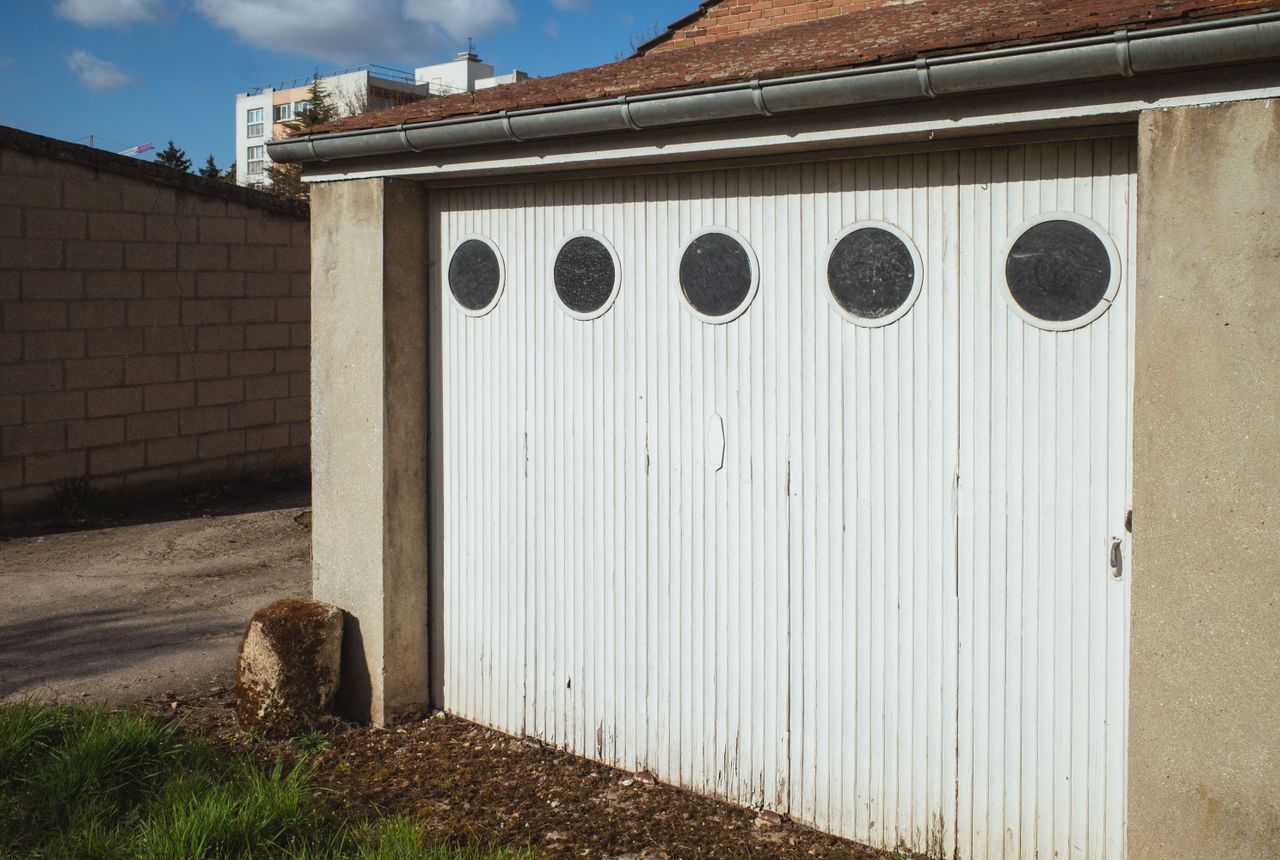
The common setup on these houses is a single steel panel door on side-mounted torsion hardware, sized for a single-car or narrow double bay, which was standard for the era. That hardware isn't what's sold off the shelf today. A broken cable or a bent track bracket on one of these doors sometimes takes an extra day to source the right part, because the spacing and drum size don't always match current stock parts.
Across the wider service area there are 225,179 households and 116,163 owner-occupied houses, most tracking that same age curve. That's a lot of original garage door hardware still doing its job, and a lot of it reaching the point where a spring replacement is overdue rather than optional.
We don't have a set price to quote here without seeing the door, so we won't invent one. What we can tell you is what drives the cost on a house from this era. If the panel is straight and the track is square, you're usually looking at spring, cable, or roller work - labor and parts, not a new door. If the bottom panel has rusted through or the track is bent from an impact, replacement panels for a door this old aren't always in stock, and matching the color and rib pattern to the rest of the door can add time.
With a median household income of $84,942 across the service area, most homeowners here are choosing to repair rather than replace when the door itself is sound - it's usually the cheaper and faster call, and it's the right one more often than not on a door from the 1960s or 70s that's been kept dry and out of a flood plain. The honest limitation: if the door has been underwater, badly rusted at the bottom corners, or the track brackets have pulled loose from rotted jamb wood, we'll tell you straight that replacement is the better spend. We won't spend three visits chasing a fix on a door that's structurally done.
Usually, yes. If the panel is straight and not rusted through, the age of the door isn't the problem - it's almost always the spring, cable, or rollers. Florissant has a lot of original doors from that era still on the house, and most of them are worth repairing rather than replacing.
Cold steel contracts and tightens the tolerance in the track, and a spring that's lost tension over the years has less pull to begin with. On a house built in the 1960s or 70s, that combination shows up hardest on the coldest mornings of the year.
If the bottom panel has rusted through, the track brackets have pulled from rotted jamb wood, or the door has taken water damage, replacement is usually the better spend. A straight panel with worn hardware is almost always worth fixing first.
Call now or request a free quote - same-day service on most repairs, upfront written pricing.