Florissant, MO · Garage Door Service
Serving Bellefontaine Neighbors from Florissant, 6 miles out. We know the 1958-era doors and torsion hardware common on this side of the county.
Bellefontaine Neighbors sits about 6 miles from our shop in Florissant, and the housing stock here runs older than the average across our whole coverage area. The median home was built in 1958, which puts a lot of these garages a good five years ahead of the broader service-area median of 1963. That matters because doors from this era were usually installed with steel that's thinner than what you'd get today, hinges that were never galvanized, and hardware sized for lighter panels. On a house this age, we're not just replacing a spring - we're often working around brackets and track that were never meant to carry a modern insulated door, if one's ever been swapped in. The cold winters this region gets (F3's moderate-cold band) don't help; steel that's already fifty-plus years old contracts and expands every season, and the fasteners loosen faster than they do on newer builds.
A lot of the garages we open up in Bellefontaine Neighbors still have their original framing from construction, even where the door itself has been replaced once or twice since. That's typical of a neighborhood built mostly in a single wave rather than filled in piecemeal over decades - you get consistency in the problems, which actually makes diagnosis faster. We're coming from Florissant, about 6 miles away, so we're not claiming a shop on every block here, just a short drive and a decent read on what a 1958-vintage opening usually needs before we even pull the truck up.
With roughly 4,373 households in this pocket, and a median income of $48,354, we see a pattern that's different from some of the wealthier suburbs further out toward Clayton or Ladue - homeowners here are more likely to ask for a repair that extends the life of the existing door instead of a full replacement, and that's a request we can usually accommodate. The original single-car and narrow double openings common to 1950s construction mean parts sourcing sometimes takes a call or two, since torsion springs and drums sized for these older, narrower tracks aren't the same stock size most warehouses carry for newer 16-foot doors. We're honest when a part isn't a same-day item - some of these older-spec pieces need to be ordered, and we'll tell you that up front instead of guessing.
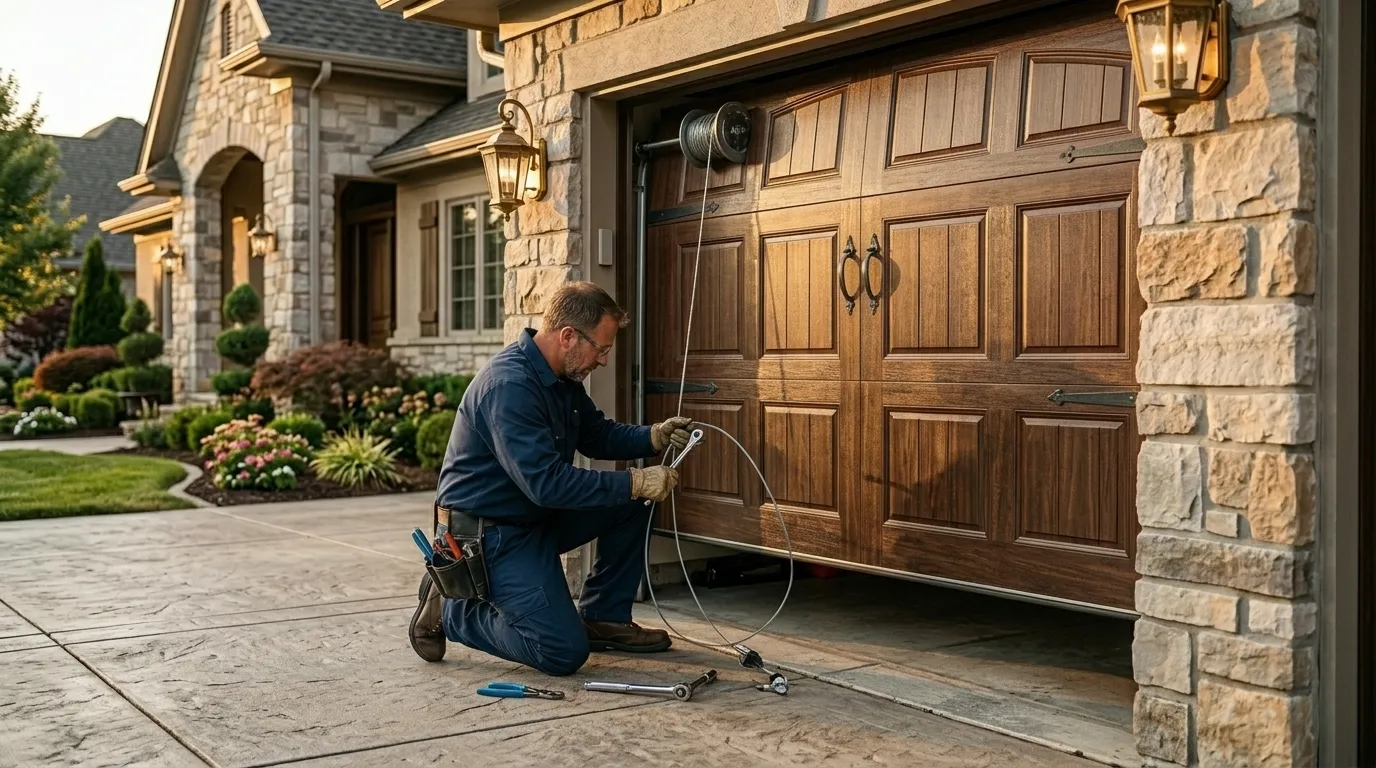
The calls that come out of this area lean toward broken torsion springs on doors that have never been replaced, worn rollers on original steel track, and openers that are clearly newer than the door they're bolted to - a sign of a prior partial upgrade rather than a full replacement. We also see loose or rusted end bearing plates, which is common once a house passes the fifty-year mark in a cold-winter climate like this one. Full replacement makes more sense than repeated patching once the door itself is warped or the track has been bent and re-bent - we'll say so plainly rather than keep billing small fixes on a door that's past the point of it being worth it.
No. We run out of Florissant, about 6 miles away, and drive out for calls in Bellefontaine Neighbors. We don't claim a depot or a guaranteed response window here - just that the drive is short and we know the housing stock.
Homes here have a median build year of 1958, older than much of the wider service area. Openings from that era were often framed narrower, with lighter track and smaller torsion hardware than what's standard on new construction, so some replacement parts have to be ordered rather than pulled off a shelf.
Sometimes. If the track is straight and the panels aren't warped, a spring or roller repair can add years of use cheaply. Once the door has been bent or patched more than once, replacement usually costs less over time than repeated repair calls.
Call now or request a free quote - same-day service on most repairs, upfront written pricing.